From Seaside Recreation to Club Rugby
From seaside recreation to club rugby: trace how coastal play became an organized local activity, and what to look for in a club’s early history.
The common mistake in tracing seaside recreation to club rugby is to assume every coastal game belonged to a direct, documented path toward a formal club. That claim can outrun the evidence: a game on a beach or open field does not, by itself, establish a club’s origin. A sound account separates what local records confirm from what the setting makes plausible.
What can the coastal setting tell us?
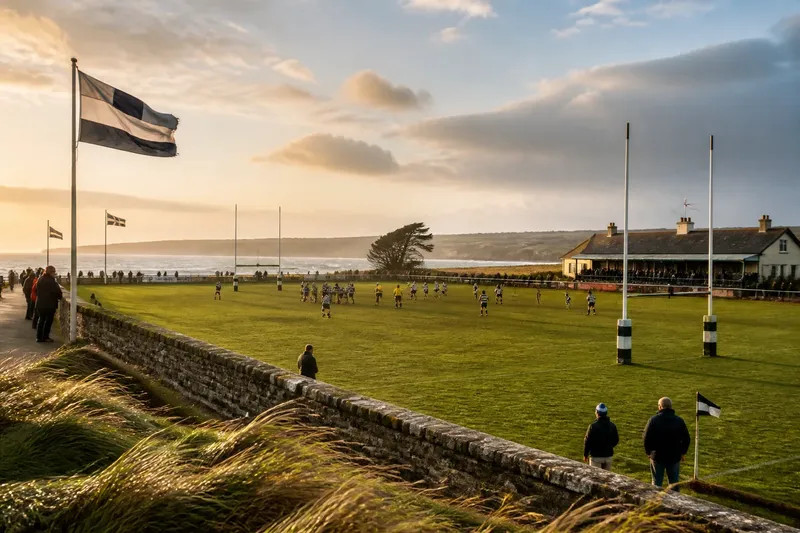
A shore, promenade, or open field could offer room for recreation, but the setting alone cannot tell us who played, how often they met, or what rules they used. Coastal places also served different purposes: a space used for leisure might be shared with residents, visitors, or other activities. Those details matter because they keep a heritage account grounded in a particular place rather than in a general image of seaside sport.
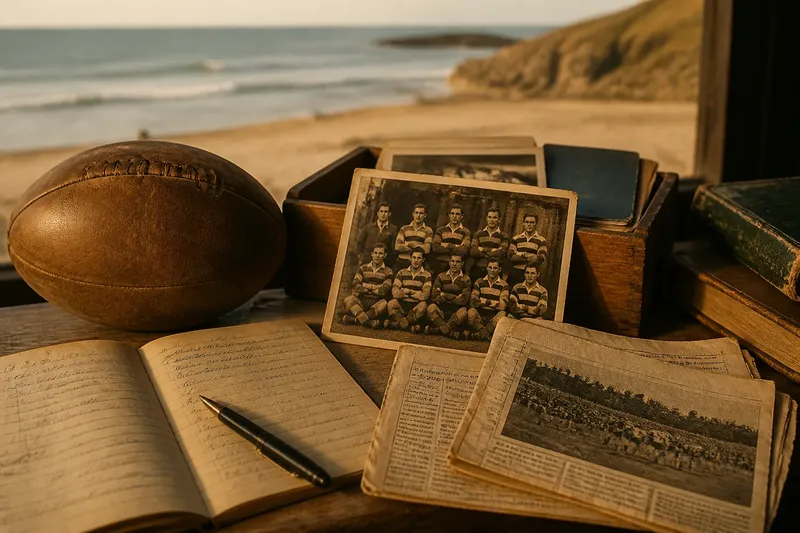
For a specific club, begin with evidence tied to its locality. Club histories, old fixture lists, local newspapers, photographs, and records held by community organizations may point to different parts of the story. A dated fixture can establish that a team played an opponent; it does not necessarily prove when the group first formed.
How can a club’s early history be reconstructed?
Build the account from separate, verifiable details instead of treating a single origin story as complete. Check names, dates, locations, and the kind of record each claim comes from. If accounts disagree, preserve the disagreement rather than smoothing it into a neat sequence.
- Check the earliest dated club record: If it names a team and activity, treat that as evidence the group was operating by then; if it is undated or ambiguous, look for a dated source before assigning a founding date.
- Check local newspaper notices: If a notice identifies a match, venue, and teams, use it to support that particular fixture; if it mentions only a gathering, do not describe it as a formal match.
- Check fixture lists and opponents: If the same team appears in arranged fixtures, describe the documented sporting relationship; if the list is incomplete, avoid claiming a continuous schedule.
- Check photographs for captions and provenance: If a reliable caption identifies the team and occasion, use those details; if the image lacks a source or date, describe only what is visible.
- Check how a ground is identified: If a record gives a named venue, use that name with its date; if it says only “near the shore,” keep the location broad rather than naming a specific ground.
- Check oral accounts against records: If a memory matches dated material, present it as corroborated recollection; if it conflicts, attribute the differing account and leave the point unresolved.
These checks help distinguish a club’s documented beginnings from a plausible background. They also make room for change: a team may have played in one place before using another, or may have appeared in records before its organization was formally described.
What does the evidence establish about club life?
Records can reveal different aspects of organization. A match notice may show that teams arranged to play; minutes or club documents may record decisions; a photograph may show a group assembled in kit. None of these sources alone necessarily explains how members found one another or how a club fit into local life.
Say an invented coastal club history has a newspaper notice naming a match at an open field, followed later by minutes naming officers and discussing equipment. The writer could state that the match was reported first and that the minutes later document formal responsibilities. The writer should not claim that the club was founded on the match date unless another source supports that conclusion.
Think of each source as a piece of a map: useful for locating one feature, but not enough to draw the whole coastline. Keeping claims close to the evidence makes the story clearer and more credible.
What questions help assess a club’s early story?
Does the first surviving record prove the club’s founding date?
No. It establishes that the club or team appears in that record by its date, but earlier activity may have gone undocumented. Use “earliest record located” unless the evidence supports a definite founding date.
Can a seaside match be called the start of a club?
Only if a source connects that match to the formation of the club. Otherwise, describe it as a documented match or an early appearance, not as the club’s beginning.
What if club memories and newspaper accounts differ?
State what each source says and note the difference. A later recollection can preserve useful detail, but it should not silently replace a contemporary record when the two conflict.
How should an uncertain venue be described?
Use the location as precisely as the source allows. If a record gives only a broad coastal area, avoid adding a specific beach, field, or ground without supporting evidence.
How should a coastal rugby story end?
A careful history can still explain why a club matters to its community. It can show what records establish about matches, places, and organization, while making clear where local memory fills gaps. For a reader searching for the transition from seaside recreation to club rugby, that distinction is useful: it reveals not a single universal route, but the evidence—and remaining uncertainty—in one club’s story.
When a source leaves a detail unresolved, mark the boundary openly. That restraint preserves the record for future researchers and lets local heritage rest on what people can actually substantiate.