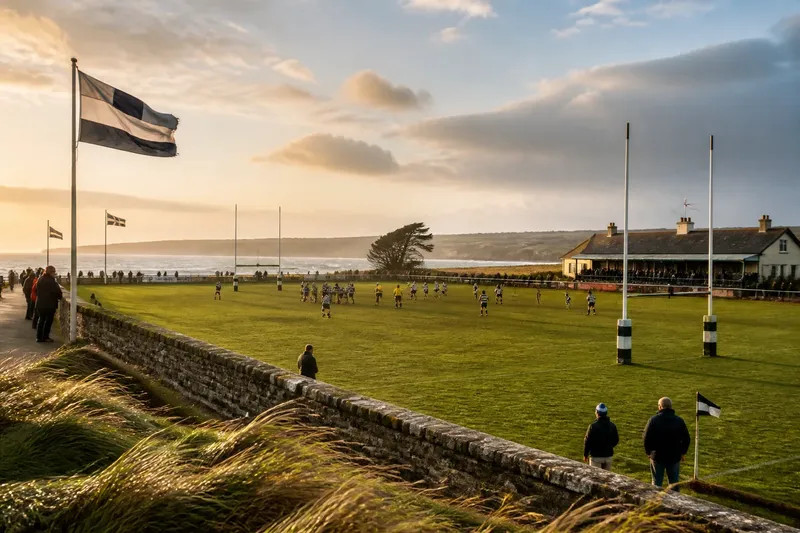
Pavilion First or Promenade First? Two Matchday Starts
Choose a seaside rugby matchday start that fits your timing, company, and appetite for a waterfront walk, so the day feels relaxed rather than rushed.

The common mistake on a seaside rugby matchday is deciding the order of the walk and club visit only after arriving. That can turn a promenade stroll into a rushed detour or leave the waterfront out altogether. Choosing pavilion first or promenade first gives the day a pace that suits what you came for.
A pavilion-first start puts the club gathering before the walk; a promenade-first start gives the coast the opening slot. The choice is less about which place matters more than which one deserves your freshest time and attention. Think of it like choosing whether to set the table before cooking: the order changes how the work feels, even though both tasks still matter.
What changes when you choose each start?
With a pavilion-first visit, the club sets the tone. You can spend time with supporters, take in the matchday atmosphere, and decide later whether a walk still fits. The waterfront is a possible addition rather than the day’s opening event.
With a promenade-first visit, the coast gets a deliberate place in the plan. You can walk before joining the matchday crowd, then head to the club when it is time to shift attention to rugby. This order works best when the walk has room in the schedule rather than being squeezed between other commitments.
Neither order is automatically better. Give priority to whichever part would feel most disappointing if it had to be shortened or skipped.
When does pavilion first make sense?
Choose the pavilion first when the social side of the day is your priority or your plans depend on meeting people at the club. It is also a sensible order when you want to spend time with supporters before deciding whether there is room for anything else.
This does not need to be a stop for directions or a ground orientation. Treat it as the visit’s social opening: settle into the club atmosphere, then decide whether to add a walk based on the time and energy left. If the group would rather stay together, keep the waterfront optional rather than asking everyone to fit it in.
- The club gathering is the main event: If the people and atmosphere matter more than the walk, go to the pavilion first; if the group would rather explore, begin on the promenade instead.
- Your companions want different things: If everyone prefers to stay together, start at the pavilion and decide as a group; if the group is comfortable splitting up, agree on a regrouping point before anyone leaves.
- You want flexibility later: If you would rather decide about the coast after settling in, choose pavilion first; if you already know the walk is a priority, protect time for it by going promenade first.
- The weather may change your plans: If outdoor conditions look uninviting, make the club your first stop; if the coast is appealing and the walk matters to you, start there while you have the choice.
- Your day is already centered on rugby: If you want the matchday gathering to shape the visit, choose pavilion first; if seeing the town is also a priority, choose promenade first.
- You expect to feel tired after the match: If you would rather walk while you have more energy, go promenade first; if the walk is not essential, leave it as an option after the club visit.
When is promenade first the better fit?
Choose the promenade first when seeing the coast is a real part of your visit, not simply a spare-time activity. This order gives the walk its own space and lets the rugby follow it, rather than making the waterfront compete with the club gathering.
It also suits visitors who like a quieter opening before joining a crowd. Consider the group’s walking preferences and how the route connects with the ground. A walk that ends far from the club may need a different turning point than one that passes nearby.
Say you arrive in town with a companion who wants the sea walk, while you are keen to spend time at the club. You have an agreed meeting at the pavilion before the match, and the local map shows a promenade route that returns toward the ground. You walk together first, turn back at the agreed point, then meet at the club. The result is that the coast gets a planned place in the day without displacing the shared club visit.
How should you choose when plans are uncertain?
Start with the part that is hardest to move. A firm meeting time or a club gathering that matters to your companions should shape the rest of the plan. A walk is often easier to shorten than a commitment to other people, while a walk that is the main reason for visiting deserves a protected place.
Then ask what your group wants the day to feel like. If people disagree, do not assume that everyone must follow the same order. Agree on where to regroup, and make sure the route and meeting point are clear to everyone. Splitting up only works if each person is comfortable with the arrangement.
Say rain begins before your group sets out, and the coast walk was a secondary idea rather than the main purpose of the visit. You choose the pavilion first and tell your companions that the promenade is off the plan unless the weather improves. The visible result is a shared, weather-aware plan instead of a group starting a walk that nobody wants to continue.
What should you check before choosing your order?
Keep the planning focused on the sequence, not on building a minute-by-minute itinerary. Check the club’s match information and a local map, then decide which stop should come first and what would make you change that order.
- Matchday information: If the club’s published details show a gathering you want to attend, choose pavilion first; if there is no club event you need to prioritize, consider promenade first when the walk matters.
- Route shape: If the map shows a straightforward walk that returns toward the ground, promenade first remains practical; if it leads away from the club, choose pavilion first or plan a shorter walk.
- Group preference: If everyone wants the same opening, follow that preference; if opinions differ, agree on a meeting point or make one stop optional.
- Weather: If conditions make being outside unpleasant, start at the pavilion; if the coast is comfortable and the walk is a priority, promenade first is a reasonable choice.
- Walking comfort: If someone in the group would find the route difficult, shorten it or stay together at the club; if the group is comfortable with the walk, keep the planned route.
- Change of plan: If you cannot name a simple alternative, decide one before leaving; if the alternative is clear, use it when weather, timing, or group energy changes.
For access and matchday arrangements, follow the club’s published instructions and any local signs. Do not assume that every seaside ground has the same route or visitor setup.
Which seaside rugby matchday start fits your plans?
Should you choose pavilion first if the club gathering matters most?
Yes. Starting at the pavilion gives the gathering priority and leaves the walk as an option if the group still wants it. If the coast is the main reason for your visit, reverse the order.
Can you walk the promenade before the match?
Yes, if the route and your schedule leave you a comfortable way to reach the club afterward. Check the map and agree on when to turn back rather than relying on the walk to fit by chance.
What if your companions disagree about which stop comes first?
Ask which stop would be harder for each person to miss, then agree on a shared priority or a clear regrouping point. If the group cannot settle on one order, make the less important stop optional instead of forcing the whole plan to fit.
Can you change the order on matchday?
Yes. If weather, timing, or the group’s energy changes, switch to the option that preserves the most important part of the visit. Tell your companions so everyone knows where the plan now leads.
How can you keep the choice simple?
Pick the stop that best expresses what you want from the day. Choose pavilion first when the club and its people should set the pace; choose promenade first when the coastal walk deserves unhurried attention. Keep the other stop optional if the schedule or conditions change.
The useful question is not whether one order is correct for every seaside rugby matchday. It is which part you would rather protect from being squeezed out. Set that priority with your companions before leaving, and the choice between pavilion first or promenade first becomes easier to make.